Introduction
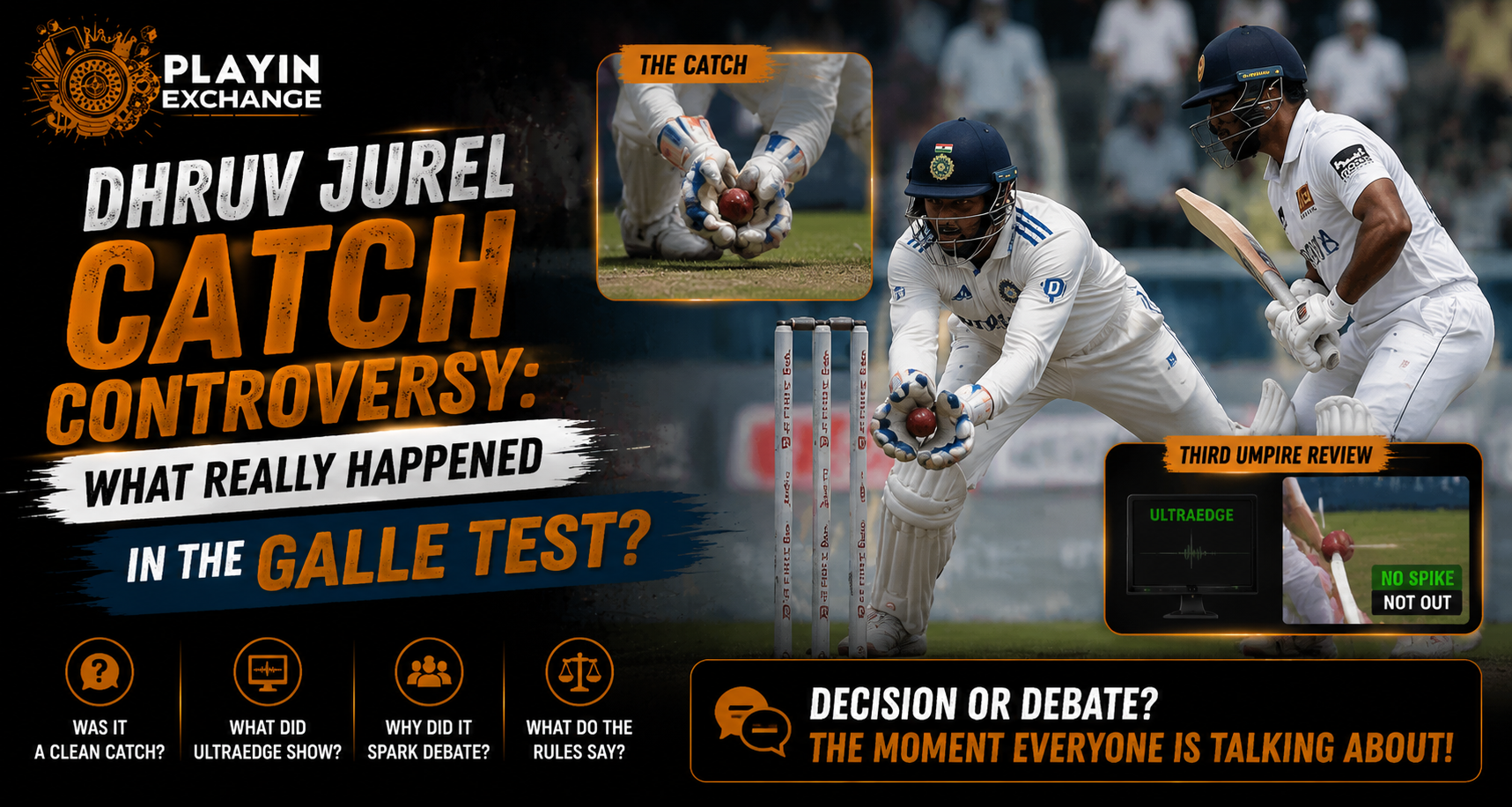
The India-Sri Lanka Test in Galle produced plenty of cricketing drama, but Dhruv Jurel’s low catch of Sri Lankan opener Lahiru Udara became one of the most debated moments. For followers checking Playexch match updates, the incident attracted attention because some replay angles appeared to raise questions about whether the ball had touched the ground before the catch was completed.
The third umpire reviewed the incident before the dismissal was upheld, leaving fans and former cricketers discussing the decision.
What Happened in the Galle Test?
The incident took place during Sri Lanka’s second innings. Udara edged a delivery towards wicketkeeper Dhruv Jurel, who moved quickly and claimed the ball close to the surface.
Because the catch was extremely low, the on-field officials decided that a review was necessary.
The key questions were:
- Did Jurel have complete control of the ball?
- Did the ball touch the ground?
- Was his hand underneath the ball?
- Did the available camera angles provide enough evidence?
- Could the catch be considered clean?
These questions made the dismissal difficult to judge from a single replay.
Why Was the Catch Controversial?
Low catches can be among the most challenging decisions for cricket officials. When the ball is close to the ground, even a small movement can create uncertainty.
In Jurel’s case, some viewers believed the ball appeared to make contact with the turf, while others felt the wicketkeeper had maintained sufficient control.
The controversy therefore focused less on whether Jurel reached the ball and more on whether he completed the catch legally.
What Did the Third Umpire Decide?
The catch was referred to the third umpire for examination using the available television footage. After reviewing the incident, the dismissal was upheld.
The decision did not stop the debate, however. Different camera angles created different interpretations among viewers, particularly on social media.
This highlights an important feature of video reviews: technology can provide additional evidence, but the footage is only as useful as the angles and clarity available to the officials.
Why Low Catches Are Difficult to Judge
A clean catch requires control of the ball without it touching the ground. A low take can make that assessment complicated.
Several factors can make these decisions difficult:
- The ball moves extremely quickly.
- The fielder’s fingers can hide part of the ball.
- The ground is very close to the hand.
- Camera angles may not show every detail.
- Slow-motion footage can create misleading visual impressions.
This is why officials may need to examine multiple angles before reaching a decision.
Jurel’s Contribution in Galle
The controversy should not overshadow Jurel’s wider contribution to the Test. The wicketkeeper-batter also made an important half-century during India’s first innings.
His 51 helped India strengthen their position after Sri Lanka’s spinners had created pressure. His innings included controlled strokes alongside the attacking shots expected from India’s middle order.
As a wicketkeeper, Jurel also had an important role behind the stumps throughout the match.
Why the Decision Mattered
Every wicket can influence the momentum of a Test match, particularly during the fourth innings when the chasing side is under pressure.
India were already in a strong position, but removing another Sri Lankan batter brought them closer to completing the victory.
A disputed dismissal can therefore attract significant attention because supporters naturally examine whether an important turning point was correctly judged.
Technology and Cricket Decisions
The Jurel incident also demonstrates the role technology now plays in cricket.
Third-umpire reviews can help officials examine:
- Catches close to the ground
- Edges detected by technology
- Run-outs and stumpings
- Boundary decisions
- Potential no-balls
However, technology does not always eliminate disagreement. When footage is inconclusive, viewers may continue to interpret the same moment differently.
What Can Fans Learn From the Incident?
The controversy is a useful reminder that a replay should not automatically be treated as definitive evidence.
When watching a disputed catch, fans should consider:
- Whether multiple angles are available.
- Whether the ball is clearly visible.
- Whether the fielder has control.
- What the official review concludes.
- Whether social-media claims are supported by evidence.
This approach can help separate genuine analysis from emotional reactions.
Following Cricket Updates Responsibly
People exploring Playexchange cricket information should distinguish between confirmed match developments and opinions shared online. A disputed catch can generate strong reactions, but social-media commentary does not replace an official decision.
For Playexchange login or account-related questions, users should also rely on verified platform channels rather than unofficial contacts requesting passwords or OTPs.
Conclusion
Dhruv Jurel’s low catch to dismiss Lahiru Udara became one of the most talked-about moments of the Galle Test. The third umpire reviewed the incident and upheld the dismissal, but questions remained because some replay angles appeared ambiguous.
Ultimately, the episode shows why low catches can be challenging even with modern technology. It also highlights the importance of considering the complete review rather than relying on a single replay or social-media reaction.
FAQs
1. Who was involved in the controversial catch?
Dhruv Jurel took the low catch to dismiss Sri Lankan opener Lahiru Udara during the Galle Test.
2. Was Jurel’s catch reviewed by the third umpire?
Yes. The on-field officials referred the catch for review, and the dismissal was subsequently upheld.
3. Why did the catch create controversy?
Some replay angles appeared to suggest that the ball may have touched the ground, while other views indicated that Jurel could have maintained control.
4. Was Lahiru Udara given out?
Yes. After the review, the dismissal was confirmed by the third umpire.
5. Why are low catches difficult to judge?
The ball is close to the ground, while the fielder’s fingers and hand can obscure important details from certain camera angles.
6. Does technology always provide a clear answer?
Not always. Technology can offer additional evidence, but the quality and angle of available footage can determine how conclusive a review becomes.