Introduction
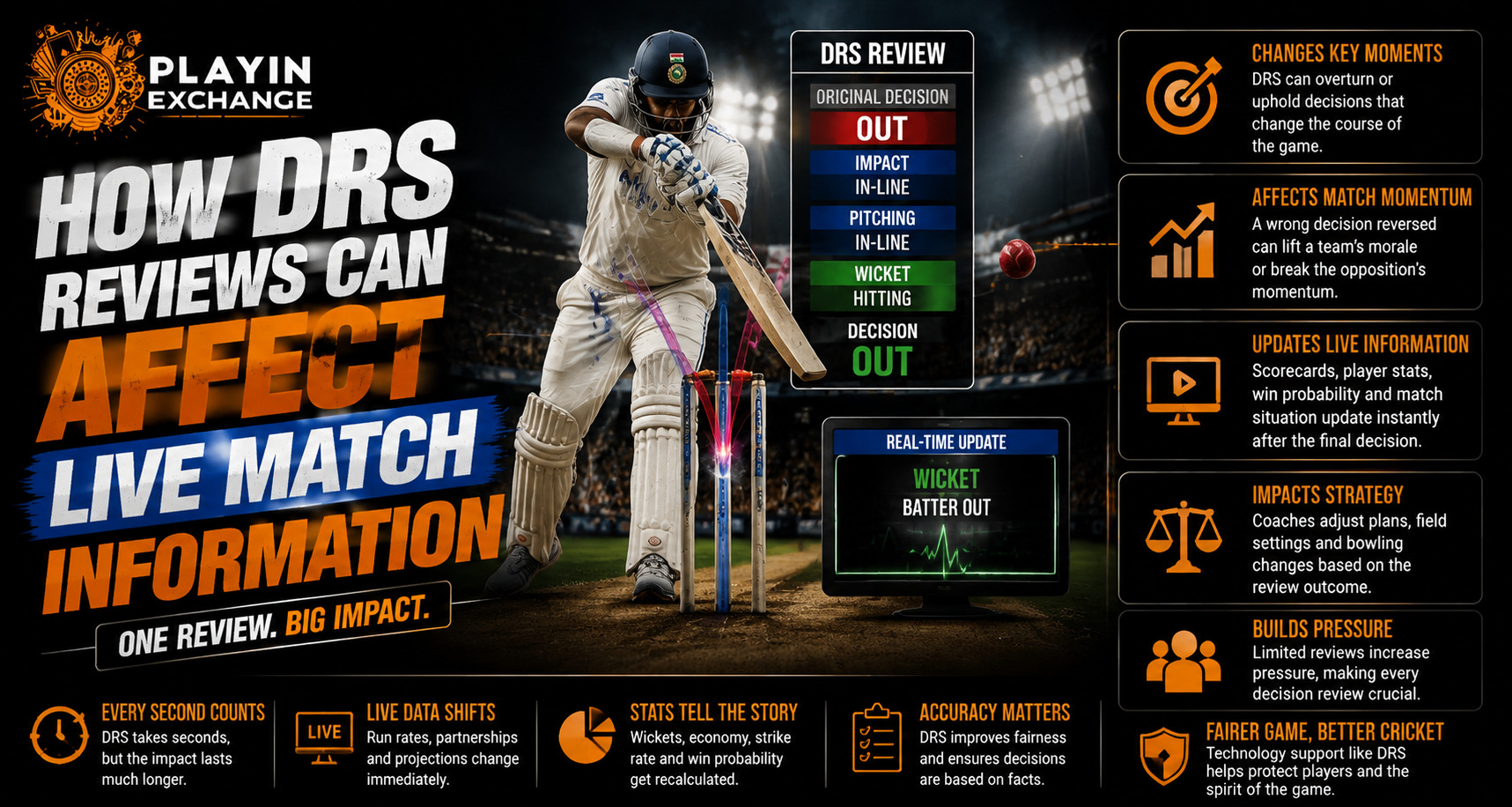
Cricket can change within seconds, but a Decision Review System (DRS) review can temporarily pause the action while officials examine an important incident. For readers following Playexch cricket updates, understanding the review process can explain why a wicket, score or batter’s status may suddenly change during a live match.
A DRS review gives officials an opportunity to examine available evidence and decide whether the original on-field decision should remain or be overturned.
What Is DRS in Cricket?
The Decision Review System is a technology-assisted process used to review eligible umpiring decisions. Depending on the format and playing conditions, the review can involve video replays, ball-tracking technology and approved edge-detection systems.
DRS can be relevant to situations such as:
- LBW decisions
- Catches
- Edges
- Run-outs
- Stumpings
- Other eligible umpiring decisions
The exact review process can vary according to the competition and its playing conditions.
Why Can Live Match Information Change?
Live score providers often display the on-field decision as soon as it is made. When a review is requested, however, that decision may not be final.
For example, a batter may initially be given out LBW. A review could then show that the ball was going to miss the stumps, resulting in the decision being overturned.
This can cause temporary changes in live information, such as:
- A wicket appearing and then disappearing
- A batter being shown as out and then returning to the crease
- A partnership being temporarily interrupted
- The score being corrected after the review
These changes are a normal part of live cricket coverage.
How DRS Reviews an LBW Decision
LBW reviews involve several important elements. The third umpire can examine where the ball pitched, where it hit the batter and whether its projected path would have hit the stumps.
Ball-tracking technology provides additional information that may not be visible to the on-field umpire.
The review may therefore confirm the original decision or overturn it depending on the available evidence and the applicable rules.
How DRS Affects Catches
Catches can be difficult to judge when the ball is very close to the ground or when contact with the bat is extremely slight. Video replays give officials an opportunity to examine multiple angles.
A review may help establish whether:
- The ball touched the bat
- The fielder had control
- The ball touched the ground
- The catch was completed legally
- The dismissal should stand
Once the review is complete, the confirmed decision can be reflected in the scorecard and live match information.
How Edge Detection Can Help
In some review situations, edge-detection technology can help identify whether the ball made contact with the bat.
This can be useful when an edge is too faint to hear or see clearly in real time. Additional evidence can assist the third umpire in determining whether a catch behind the wicket or another edge-related appeal should be upheld.
The final decision still depends on the applicable review procedures and the evidence available to officials.
What Happens When Out Becomes Not Out?
If a batter is initially given out and the review overturns that decision, the batter remains in the innings.
This can immediately change the match situation because the batting side keeps a player who appeared to have been dismissed.
The reversal may affect:
- Partnership calculations
- Batting plans
- Bowling strategy
- Required scoring rate
- Match momentum
A successful review can therefore have a much wider effect than simply removing one wicket from the scoreboard.
What Happens When Not Out Becomes Out?
A review can also change a not-out decision into a dismissal.
For example, a batter may survive an appeal on the field, but technology may later confirm that an edge occurred or that the LBW conditions were satisfied.
Once the final decision is announced, the wicket is added to the official match situation and the batting side must adjust accordingly.
Why Live Scores Can Temporarily Look Confusing
Different live-score services may receive updates at slightly different times. One platform may still display the initial decision while another shows that a review is in progress.
This does not necessarily mean that one source is wrong.
During a review, viewers should wait for the third umpire’s final decision before treating the wicket, score or batter’s status as confirmed.
How DRS Can Change Match Statistics
When a review changes an umpiring decision, several pieces of live information may need to be updated.
Possible changes include:
- Wicket count
- Batter status
- Partnership figures
- Bowler figures
- Innings score
- Required scoring rate
This is why live scorecards can briefly look different before the official result is processed.
Why DRS Matters to Team Strategy
DRS is not only a technology feature. It can also influence a team’s tactical decisions.
Teams have limited review opportunities under the relevant playing conditions, so captains and players need to judge whether an appeal is strong enough to challenge.
A successful review can overturn an important decision, while an unsuccessful review may reduce the opportunities available for later incidents.
Live Scores During a DRS Review
During a DRS review, cricket fans using Playexchange can sometimes see temporary changes in the displayed score, wicket count or batter status. These updates may reflect the original on-field decision until the third umpire announces the final ruling. Checking the confirmed result after the review helps avoid confusion when following a close match incident.
Why Social Media Can Create Confusion
DRS decisions often generate immediate reactions on social media. Fans may share screenshots or short video clips before the review is completed.
This can create confusion because:
- The review may still be underway.
- A single camera angle may not show the complete incident.
- The original decision may later be overturned.
- The shared information may already be outdated.
For accurate information, it is better to wait for the official decision before drawing conclusions.
How Fans Can Follow a DRS Review
When a review begins, viewers can follow a simple sequence:
- Note the original umpire decision.
- Check whether a review has been requested.
- Watch the available evidence.
- Wait for the third umpire’s decision.
- Check the updated scorecard.
- Continue following the match after the result is confirmed.
This makes it easier to understand sudden changes during close incidents.
Why DRS Does Not Remove Every Debate
Technology can provide additional evidence, but it does not guarantee that every decision will be free from disagreement.
Some incidents may remain difficult because the evidence is marginal, the camera angle is limited or the relevant playing conditions require an element of umpire judgement.
As a result, viewers may still disagree with a final decision even after a review has taken place.
Conclusion
DRS reviews can significantly affect live match information because an on-field decision is not always the final outcome. A wicket can be overturned, a batter can be dismissed after an initial not-out decision, and related statistics can change once the third umpire completes the review.
For fans following live cricket, the best approach is to wait for the confirmed decision before treating a score or wicket update as final. Understanding how DRS works also makes sudden changes in live scorecards easier to understand.
FAQs
1. What is DRS in cricket?
DRS stands for Decision Review System. It uses approved technology and video evidence to assist officials when reviewing eligible on-field decisions.
2. Can DRS overturn a wicket?
Yes. A wicket can be overturned when the review provides enough evidence that the original decision was incorrect.
3. Can a batter be given out after being declared not out?
Yes. An eligible not-out decision can be changed to out following a successful review.
4. Why can live scores change during a DRS review?
Live score information may initially reflect the on-field decision. After the third umpire reaches a final decision, the score and wicket information can be updated.
5. What technology can be used during DRS?
Depending on the format and playing conditions, reviews can involve video replays, ball tracking and approved edge-detection technology.
6. Why should viewers wait for the final DRS decision?
The initial umpire decision can change during the review. Waiting for the third umpire’s ruling ensures that viewers are following the confirmed match situation.