Introduction
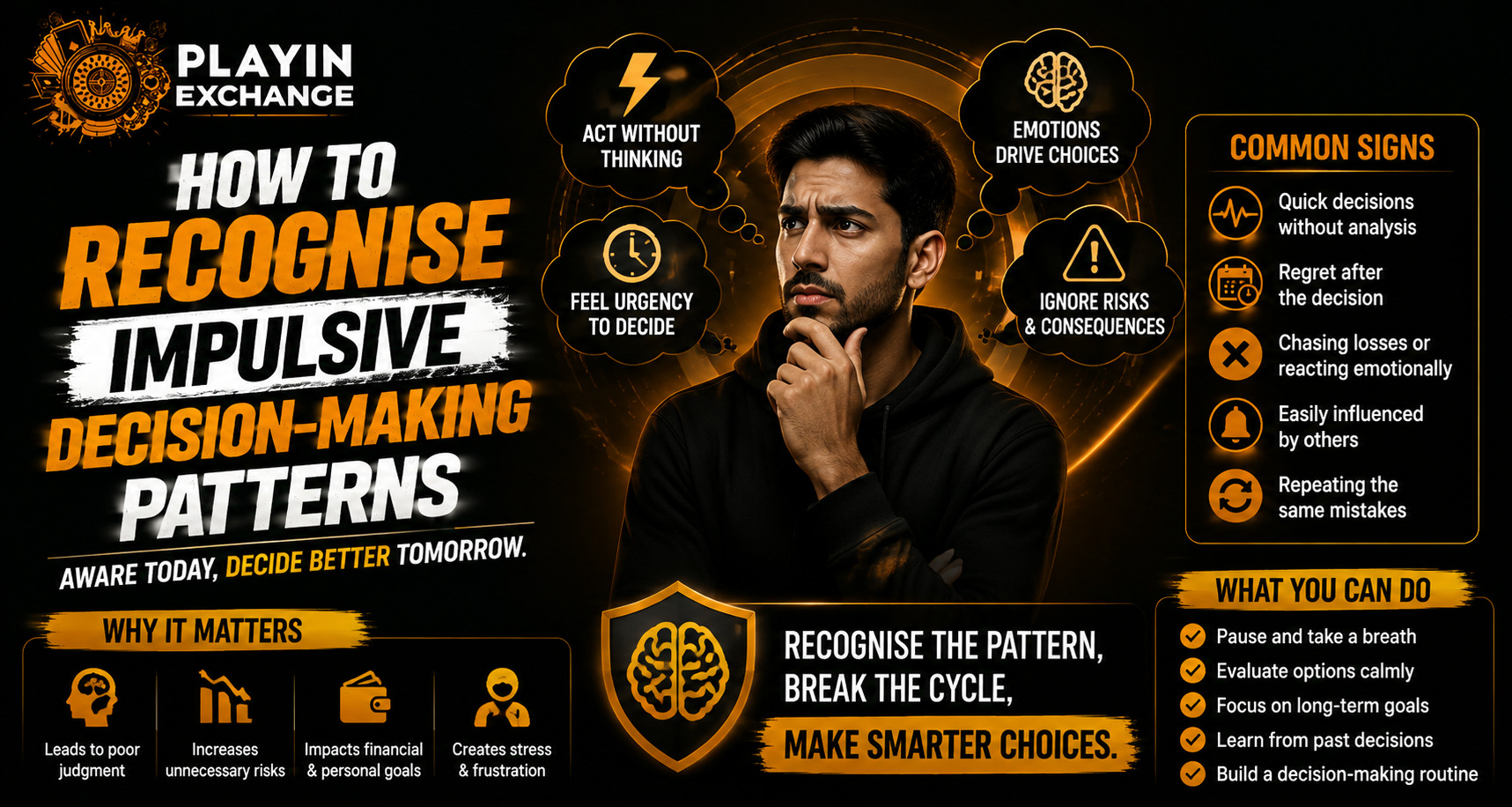
Impulsive decision-making can happen when a person reacts quickly without giving enough time to consider the consequences. In sports, financial activities and everyday situations, strong emotions can sometimes influence choices more than facts or careful planning. For users following Playexch and other sports-related platforms, recognising these patterns can help encourage more thoughtful and controlled decisions.
Impulsive behaviour does not always mean making a poor choice. The concern arises when decisions are repeatedly made without adequate consideration, especially when emotions such as excitement, frustration or pressure are involved.
What Is Impulsive Decision-Making?
Impulsive decision-making means acting quickly in response to a thought, emotion or situation without considering the possible consequences.
Common examples can include:
- Acting immediately after an unexpected result
- Making decisions while highly emotional
- Changing a plan without a clear reason
- Increasing spending after a loss
- Reacting to pressure from others
- Making repeated decisions without reviewing the previous outcome
Recognising these behaviours is the first step toward developing better decision-making habits.
Acting Too Quickly
One of the clearest signs of impulsive behaviour is making a decision immediately without taking time to assess the situation.
For example, a person may see breaking sports news and instantly react without checking whether the information is accurate.
Creating a short pause can help. Even a few minutes can provide enough time to ask whether the decision is based on reliable information or an emotional reaction.
Decisions Driven by Emotions
Emotions can strongly influence judgement.
Common emotional triggers include:
- Excitement after a successful outcome
- Frustration after a loss
- Anger following an unexpected event
- Anxiety about missing an opportunity
- Overconfidence after a positive result
When emotions become intense, stepping away from the situation can help prevent a quick reaction from becoming a repeated pattern.
Chasing Previous Losses
Chasing losses is a particularly important warning sign in betting-related situations. It happens when someone increases or continues their activity primarily to recover money that was previously lost.
This can create a cycle in which one unsuccessful outcome leads to another decision made under greater pressure.
A healthier approach is to accept that previous outcomes cannot be changed and maintain any spending limits established beforehand.
Constantly Changing Decisions
Another pattern is repeatedly changing decisions without new evidence.
For example, someone may:
- Make an initial decision.
- See a new opinion online.
- Change their decision.
- Read another prediction.
- Change it again.
This can indicate that the person is reacting to external pressure rather than following a clear plan.
Reliable information should influence decisions, but constant reaction to every new opinion can make the process less consistent.
Social-Media Pressure
Social media can amplify impulsive behaviour because information appears continuously and often uses emotionally strong language.
A prediction may appear more convincing because it has thousands of views, likes or comments.
Before reacting, consider:
- Who published the information?
- Is there evidence?
- Is the information current?
- Is it confirmed or speculative?
- Would you make the same decision without seeing the post?
These questions can help separate genuine information from emotional influence.
Recognising the Physical Signs
Impulsive decision-making can sometimes be accompanied by noticeable physical or behavioural changes.
A person may notice:
- Restlessness
- Difficulty concentrating
- Feeling rushed
- Repeatedly checking updates
- Tension after an unexpected result
- Difficulty stopping an activity
These signs can act as reminders to pause before making another decision.
Creating a Decision Pause
A simple pause routine can help reduce impulsive reactions.
Before making a decision, ask:
- What is making me want to act right now?
- Do I have reliable information?
- Am I reacting to an earlier outcome?
- Can I afford the consequences?
- Would I make the same decision after waiting ten minutes?
If the answer to the last question is uncertain, taking a break may be appropriate.
Using a Pre-Match or Pre-Decision Plan
Planning decisions in advance can reduce the influence of emotions later.
A plan might include:
- A fixed budget
- Specific information sources
- A clear stopping point
- A limit on time spent following updates
- Conditions for avoiding further decisions
A written plan can be particularly useful because it gives you something objective to follow when emotions become stronger.
Keeping Account Activity Secure
People searching for Playexchange login information should use the correct official access route rather than responding to pressure from unknown contacts. Impulsive decisions can also create security problems when users click unfamiliar links or share account details without checking them.
Passwords, OTPs and payment credentials should remain private, regardless of how urgent a message appears.
Conclusion
Recognising impulsive decision-making patterns involves paying attention to speed, emotions, repeated reactions and pressure from external sources. Acting immediately, chasing previous losses, constantly changing decisions and following viral opinions without checking them can all indicate that a pause is needed.
A simple routine of checking the facts, reviewing the possible consequences and following a pre-defined plan can encourage more controlled decisions. The goal is not to eliminate every quick decision, but to make sure important choices are based on clear thinking rather than temporary emotions.
FAQs
1. What is impulsive decision-making?
Impulsive decision-making involves acting quickly without adequately considering the information, risks or possible consequences.
2. What is a common sign of impulsive behaviour?
Making decisions immediately after an emotional event, repeatedly changing choices or acting without checking reliable information can be common signs.
3. Why can emotions affect decision-making?
Strong emotions such as excitement, frustration and anxiety can make people focus on immediate reactions instead of longer-term consequences.
4. What does chasing losses mean?
Chasing losses means continuing or increasing activity in an attempt to recover money lost previously. It can lead to increasingly risky decisions.
5. Can taking a short break help?
Yes. A short pause can create distance from an emotional reaction and provide time to reconsider the decision more carefully.
6. How can I reduce impulsive decisions?
Set clear limits, verify information, avoid acting under pressure, create a simple plan and take a break whenever you notice yourself reacting emotionally.