Introduction
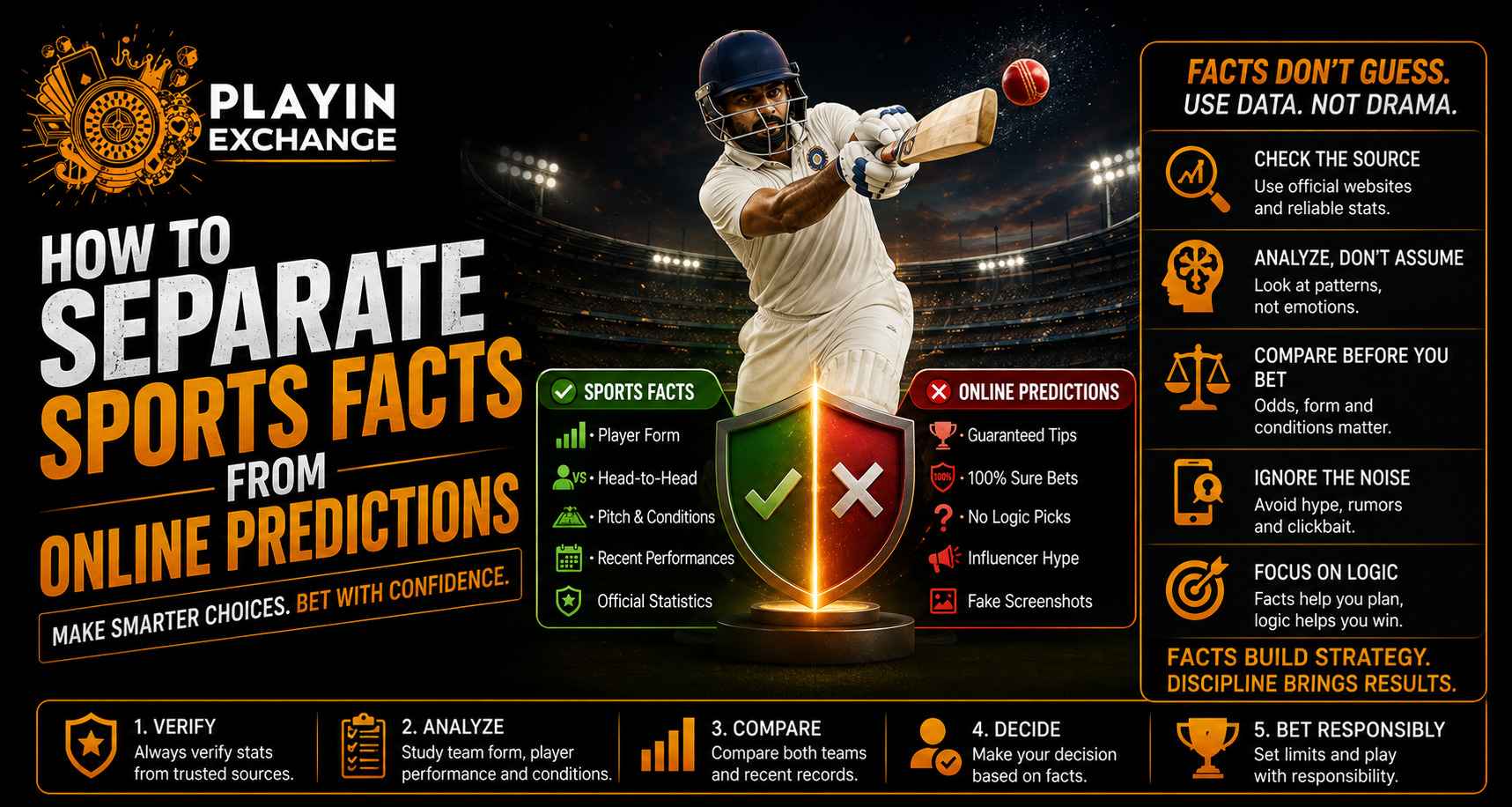
Sports fans encounter a constant stream of information through websites, social media, videos and discussion forums. Some posts provide confirmed facts, while others offer predictions about what might happen next. For readers following Playexch cricket updates, knowing the difference between verified information and speculation can make sports coverage easier to understand.
A confirmed team announcement is different from a prediction about the likely playing XI, just as an official score is different from a forecast about the final result.
What Counts as a Sports Fact?
A sports fact is information that can be verified through a reliable source. It usually relates to something that has already happened or has been officially confirmed.
Examples include:
- A player scored 100 runs.
- A team won a completed match.
- A player was officially ruled out.
- A tournament published its schedule.
- A captain announced the playing XI.
Official team websites, governing bodies and established scorecards are useful places to verify such information.
What Is an Online Prediction?
A prediction is an opinion about something that may happen in the future. Even when it comes from an experienced analyst, it remains a forecast rather than a confirmed fact.
Common examples include:
- Predicting a match winner
- Guessing the playing XI
- Forecasting a player’s score
- Predicting a team’s final position
- Suggesting a possible transfer
- Estimating who may be selected
Predictions can be useful for discussion, but they should be presented as possibilities rather than certainties.
Check the Source First
The easiest way to separate facts from predictions is to examine where the information originated.
Reliable sources can include:
- Official cricket boards
- Tournament organisers
- Team announcements
- Official scorecards
- Established sports publications
- Direct player or coach statements
A social-media post without a source requires more caution, especially when it makes a dramatic claim.
Look at the Language Used
The wording of an article or post can reveal whether something is confirmed.
Words such as “confirmed”, “announced” or “official” suggest that a source is presenting established information. Words such as “could”, “may”, “reportedly”, “expected” or “likely” usually indicate uncertainty.
For example, “the player has been ruled out” is a factual claim that can be checked. “The player could miss the next match” is a prediction unless an official announcement supports it.
Compare Multiple Sources
One online post should not automatically be treated as reliable evidence. When an important sports story appears, compare it with other credible sources.
A useful process is:
- Find the original claim.
- Identify the source behind it.
- Search for official confirmation.
- Compare reports from reputable publications.
- Check whether later updates changed the story.
This is especially useful for injury news, selection rumours and transfer reports.
Be Careful With Viral Predictions
Social media rewards content that attracts attention. A confident prediction can spread widely even when there is little evidence supporting it.
A post may become popular because it is:
- Dramatic
- Controversial
- Emotional
- Shared by a well-known account
- Supported by large numbers of comments
Popularity does not establish accuracy.
Distinguish Statistics From Interpretation
Statistics are generally factual when they come from an accurate and appropriate source. The interpretation of those statistics is different.
For example, the number of runs a batter scored in a match is a statistic. Saying that the performance means the batter will definitely score a century in the next match is a prediction.
Keeping these two ideas separate helps prevent misleading conclusions.
Watch for Old Information
Sports news can become outdated quickly. A report published before a match may say that a player is expected to participate, while a later announcement could confirm that the player has been ruled out.
Always check:
- Publication date
- Latest team announcement
- Match status
- Player availability
- Whether the original report was updated
An accurate article can still become outdated when circumstances change.
Use Match Context Carefully
Facts become more useful when they are placed in the right context. A player’s recent form, for example, may help explain why analysts expect a strong performance, but it cannot guarantee what will happen.
Other factors can change the outcome, including:
- Pitch conditions
- Weather
- Opposition tactics
- Player fitness
- Toss result
- Match pressure
This is why historical statistics should support analysis rather than be treated as a prediction of the future.
Sports Predictions and Betting Decisions
People researching cricket markets should be particularly careful when predictions are presented as guaranteed outcomes. No online analyst can guarantee the result of a cricket match.
Users searching for Playexchange login should separately verify account-access information through the correct website or authorised channel rather than relying on social-media posts.
Passwords, OTPs and other confidential details should never be shared with unknown contacts.
A Simple Fact-Checking Checklist
Before believing an important sports claim, ask:
- Is there an original source?
- Has the information been officially confirmed?
- Is the source current?
- Is the statement a fact or a prediction?
- Do other reputable sources report the same information?
If these questions cannot be answered, treat the claim cautiously.
Conclusion
Separating sports facts from online predictions is mainly about checking sources, understanding language and recognising uncertainty. Official results, confirmed team announcements and verified statistics should be distinguished from forecasts, rumours and opinions.
Online predictions can make sports discussions more interesting, but they should never be mistaken for guaranteed information. By checking current sources and comparing important claims, fans can build a clearer and more balanced understanding of the game.
FAQs
What is the difference between a sports fact and a prediction?
A sports fact is information that can be verified, while a prediction describes what someone believes may happen in the future.
Are social-media sports predictions reliable?
They can provide opinions and analysis, but popularity does not prove accuracy. Important claims should be checked against reliable sources.
Which sources are best for verifying sports facts?
Official team websites, cricket boards, tournament organisers, scorecards and reputable sports publications are useful sources for verification.
Why should I check the publication date?
Sports information can change quickly. An older report may no longer reflect a player’s availability, team selection or match situation.
Does good statistics-based analysis guarantee a prediction?
No. Statistics provide useful context, but injuries, conditions, tactics and unexpected events can change a match.
How can I quickly check whether a sports claim is true?
Find the original source, look for official confirmation, check the date and compare the claim with reports from other reliable sources.