Introduction
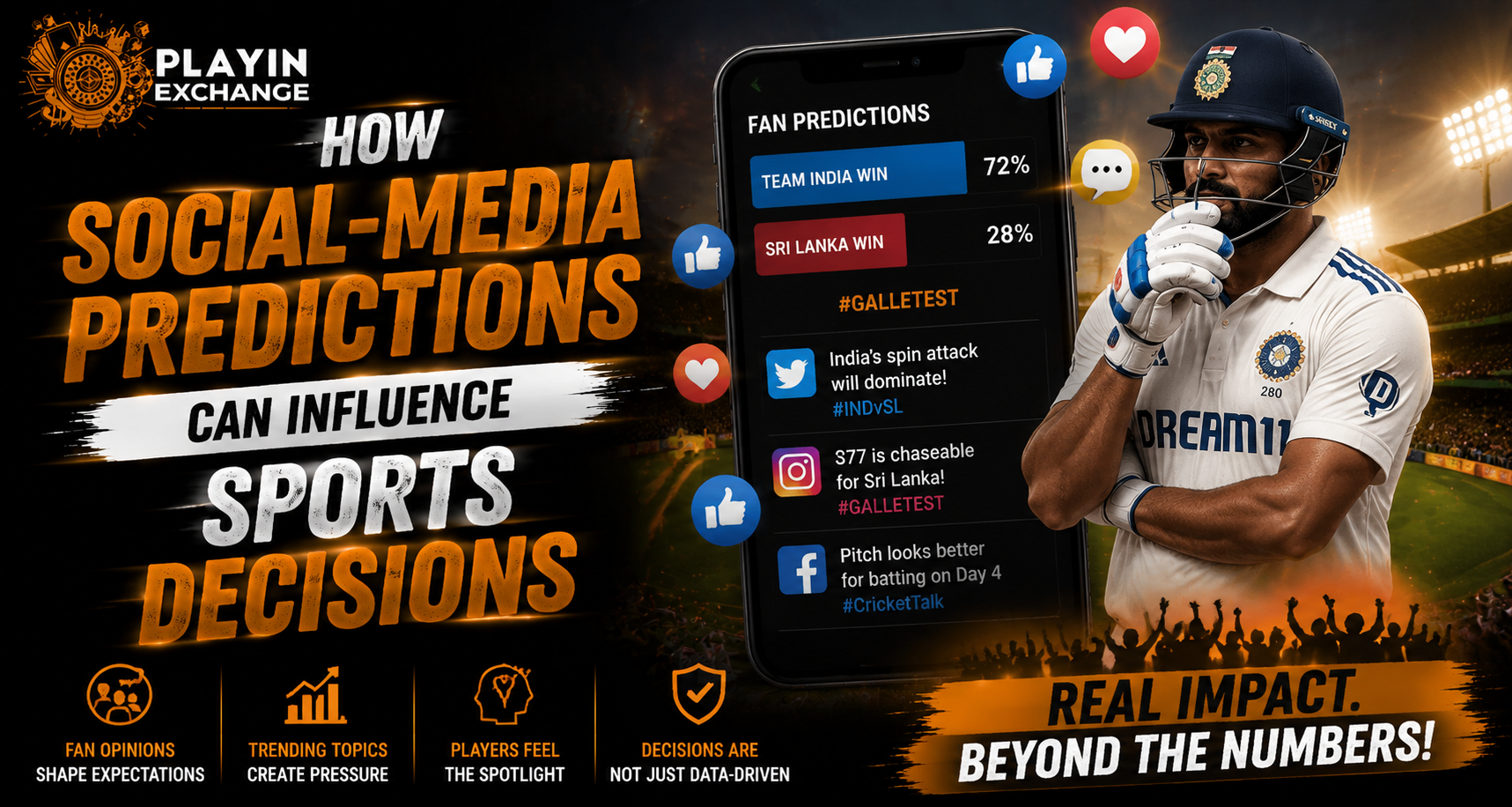
Social media has become an important source of sports information, with fans, analysts, former players and content creators sharing predictions before and during matches. These opinions can spread quickly and sometimes influence how people understand teams, players and potential match outcomes.
For users following sports discussions through Playexch, it is important to distinguish between informed analysis, personal opinion and speculation. A prediction that receives thousands of likes or shares is not automatically more accurate.
Why Social-Media Predictions Attract Attention
Sports predictions are naturally engaging because supporters want to know what might happen next. Social platforms make these opinions highly visible and easy to discuss.
Several factors make predictions popular:
- Short and easy-to-understand posts
- Real-time match discussions
- Large numbers of comments and reactions
- Expert opinions mixed with fan predictions
- Fast updates during important matches
The speed of social media can make an opinion appear more authoritative than it actually is.
How Predictions Can Influence Decisions
People may change their expectations after repeatedly seeing the same prediction online. For example, if several popular accounts predict that a particular team will dominate, readers may begin to view that outcome as more likely.
This can happen through:
Confirmation Bias
People often pay greater attention to information that supports what they already believe.
Social Proof
A prediction with thousands of likes can appear credible simply because many people interacted with it.
Emotional Influence
Exciting headlines and confident language can encourage quick reactions, particularly during live matches.
Repetition
Seeing the same prediction across multiple accounts can create the impression that there is strong evidence behind it, even when the posts originate from the same source.
Popularity Does Not Equal Accuracy
One of the most important lessons when reading sports predictions is that popularity is not the same as reliability.
A prediction can become viral because it is:
- Entertaining
- Controversial
- Emotional
- Shared by a famous account
- Based on a dramatic storyline
None of these factors guarantee that the prediction is correct.
Instead, readers should consider the reasoning behind the prediction and whether it is supported by relevant statistics, team news and credible information.
Impact During Live Matches
Social-media influence can become stronger during live games because information moves almost instantly.
A wicket, injury, dropped catch or sudden change in momentum can trigger thousands of predictions within minutes.
This can create a cycle:
- A major event occurs.
- Users post immediate reactions.
- Other users repeat the prediction.
- The prediction gains visibility.
- More people begin discussing the same outcome.
The process can make a short-term opinion appear more certain than it really is.
The Risk of Following Influencers Blindly
Sports influencers can provide useful analysis, but their opinions should not automatically be treated as professional forecasts.
Before relying on a prediction, consider:
- Does the person explain their reasoning?
- Do they provide relevant statistics?
- Are they transparent about uncertainty?
- Do they regularly make exaggerated claims?
- Is the information based on current team news?
A confident prediction without supporting evidence should be treated as an opinion rather than a fact.
How to Evaluate Sports Predictions
A more balanced approach is to compare several reliable sources instead of following one social-media account.
Look for:
- Confirmed team news
- Recent player performances
- Playing conditions
- Injury updates
- Historical context
- Official match information
- Independent expert analysis
It is also useful to separate confirmed information from predictions. A confirmed playing XI is factual, while a claim about who will score the most runs is a forecast.
Social Media and Betting Decisions
Social-media predictions can be particularly influential when people are making betting-related decisions. A viral prediction may create unnecessary confidence and encourage impulsive choices.
Users exploring Playexchange cricket content should remember that predictions cannot guarantee match outcomes. Cricket is affected by variables such as pitch conditions, weather, player performance, injuries and unexpected match situations.
For Playexchange login or account-related concerns, users should rely on official account channels rather than social-media contacts offering unofficial assistance.
Responsible Decision-Making
A sensible approach is to slow down before acting on a prediction. Ask whether the decision is based on reliable information or simply influenced by what is currently trending.
Useful habits include:
- Avoid acting immediately after reading a viral prediction.
- Compare information from multiple credible sources.
- Set a personal spending limit where applicable.
- Do not chase losses because a prediction failed.
- Treat predictions as opinions rather than guarantees.
Conclusion
Social-media predictions can strongly influence sports decisions because they combine speed, repetition, popularity and emotional reactions. However, visibility does not prove accuracy. A prediction supported by thousands of likes can still be wrong, while a less popular analysis may contain stronger reasoning.
The best approach is to verify important information, consider multiple perspectives and maintain realistic expectations. Social media can be useful for following sports conversations, but final decisions should not be based solely on viral predictions.
FAQs
1. Can social-media predictions affect sports decisions?
Yes. Repeated predictions, popular opinions and emotional posts can influence how people perceive teams, players and potential match outcomes.
2. Are popular sports predictions usually reliable?
Not necessarily. Popularity reflects engagement rather than accuracy. Predictions should be evaluated based on evidence and reasoning.
3. Why do people follow sports predictions on social media?
They are quick, accessible and often provide real-time opinions from analysts, former players, influencers and other fans.
4. Should social-media predictions be treated as facts?
No. Predictions are opinions about possible future outcomes. Confirmed team news and official statistics should be distinguished from speculation.
5. How can I evaluate a sports prediction?
Check the reasoning, supporting statistics, current team information, playing conditions and the credibility of the person making the prediction.
6. Can social-media predictions influence betting decisions?
Yes. Viral predictions can create confidence or emotional pressure. It is safer to avoid making financial decisions based solely on social-media opinions.