Introduction
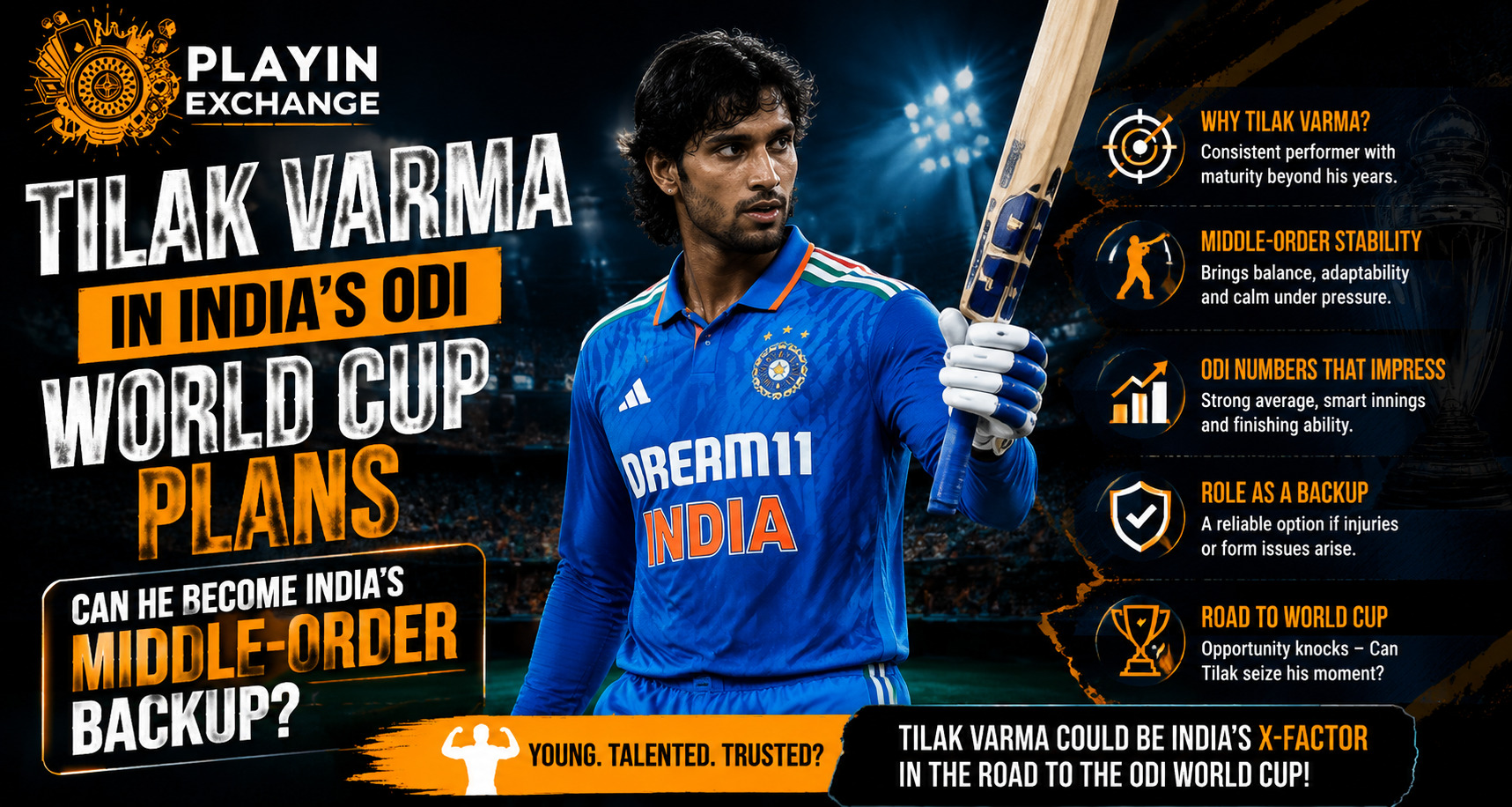
India have begun looking beyond their established ODI combination as preparations for the 2027 World Cup continue. Tilak Varma has emerged as a potential backup option for Shreyas Iyer in the top six, according to recent reports. For readers following Playexch cricket updates, his emergence is interesting because he offers left-handed batting variety and the possibility of useful off-spin.
The aim is not necessarily to replace Iyer immediately. Instead, India appear to be building reliable alternatives so that injuries, workload concerns or changes in form do not leave the middle order without a natural replacement.
Why Tilak Varma Is Being Considered
India’s top six can become heavily right-handed, so Tilak provides a different batting option. His left-handed approach could help create more variety within the middle order and give the team another player who can occupy different positions.
His potential value includes:
- Left-handed batting
- Middle-order flexibility
- Ability to handle spin
- Developing off-spin
- Strong potential for long-term ODI development
Recent reports say the selectors are particularly interested in building like-for-like backup options rather than moving established players into unfamiliar roles.
Shreyas Iyer Remains an Important Part of the Plan
The current discussion around Tilak should not be interpreted as an indication that India have discarded Shreyas Iyer. Instead, the management reportedly wants dependable cover for key positions within the ODI lineup.
Iyer has been a significant middle-order option for India, and having a specialist backup could help preserve the team’s structure if he becomes unavailable.
This approach can also reduce the need to move an opener or all-rounder into the middle order simply to fill one vacancy.
Left-Handed Batting Could Be a Major Advantage
One of Tilak’s clearest advantages is his batting hand. India’s ODI lineup can benefit from having a left-hander among several right-handed batters.
A varied batting combination can give captains more flexibility when managing bowling matchups. It can also make field placements and bowling plans less predictable.
Tilak’s left-handed batting therefore gives him a distinct point of difference.
His ODI Experience Still Needs to Grow
While Tilak has already represented India in ODIs, his experience in the format remains limited. Rediff reported that he had played five ODIs and scored 68 runs at an average of 22.7.
Those numbers show that he still has work to do before becoming an automatic selection.
His future ODI opportunities will be important for determining whether he can consistently perform against different bowling attacks and in different match situations.
Developing His Off-Spin Could Strengthen His Case
The biggest additional factor could be Tilak’s bowling. Recent reporting says the team management has encouraged him to develop his off-spin because India want more bowling options among their top-order batters.
Even if he is not used as a frontline bowler, the ability to contribute several overs could become valuable.
An extra bowling option can help a captain manage workloads, respond to difficult matchups and adapt when one of the main bowlers has an expensive spell.
Why Bowling Depth Matters
India’s selection thinking appears to include a broader concern about balance. According to recent reports, the management is looking for more batting options that can contribute with the ball.
This could reduce pressure on specialist bowlers and provide greater flexibility in building the final XI.
For Tilak, improving his bowling could therefore make the difference between being viewed as simply another batting reserve and becoming a genuine all-round option.
Competition for the Middle Order
Tilak is not the only player India can consider when developing World Cup depth. The selectors have several options across the batting and all-round departments.
However, his particular combination of youth, left-handed batting and developing off-spin gives him an interesting profile.
India’s recent thinking reportedly favours players who naturally fit the roles they are being considered for instead of constantly shifting others around the batting order.
What Tilak Needs to Prove
Being identified as a potential backup is only the beginning. He will need consistent performances when opportunities arrive.
The key areas to watch are:
- ODI batting consistency
- Performance under pressure
- Ability to rotate the strike
- Adaptation to different conditions
- Fielding standards
- Progress with off-spin
- Fitness throughout the season
Strong performances over a sustained period would strengthen his case considerably.
The New Zealand ODI Series Could Be Important
India’s longer-term World Cup planning is expected to become more significant during the New Zealand tour in October, which includes five ODIs. Recent reports identify that period as a more important stage for assessing the World Cup combination.
That could provide Tilak with valuable opportunities to establish himself in the format.
The selectors will be looking not only at runs but also at how effectively he fits into the team’s overall structure.
Why India Want Reliable Backups
Major tournaments require more than a strong first-choice XI. Injuries, fitness issues and changes in form can force teams to alter their lineups at short notice.
Developing backups early can provide several benefits:
- Greater squad depth
- Less disruption after injuries
- Better role clarity
- More competition for places
- Greater tactical flexibility
This appears to be one of the reasons Tilak has entered the conversation well before the 2027 World Cup.
A Potential Role Beyond Batting
Tilak could eventually offer India flexibility in two departments. His main responsibility would remain batting, but useful off-spin could provide an additional option when conditions or match situations require it.
That does not mean he needs to become a full-time all-rounder. Even a reliable short spell can have tactical value in ODI cricket.
What This Means for India’s World Cup Planning
The discussion around Tilak reflects a wider shift towards long-term squad planning. India are not simply selecting players for the next series; they are also considering which combinations can remain effective through the 2027 World Cup cycle.
For Tilak, the message is clear: strong ODI performances and progress with the ball can significantly improve his chances of becoming part of that plan.
Mobile Cricket Access and Security
Fans following World Cup preparation on mobile devices may use Playexchange when checking cricket information. Before entering any account credentials, users should confirm that they are using the correct website and avoid unfamiliar links.
Keeping passwords, OTPs and other confidential information private is also important when accessing sports-related services online.
Conclusion
Tilak Varma has emerged as a potential middle-order backup for India ahead of the 2027 ODI World Cup, with recent reports particularly linking him to cover for Shreyas Iyer. His left-handed batting gives India useful variety, while his developing off-spin could provide the additional bowling depth the management wants.
However, being considered is not the same as being selected. Tilak still needs more ODI opportunities and consistent performances to establish himself as a dependable option.
The next phase of India’s ODI planning, particularly the New Zealand series in October, could provide important evidence about whether he is ready to take that next step.
FAQs
1. Why is Tilak Varma being considered for India’s ODI World Cup plans?
Recent reports indicate that India are considering him as potential middle-order cover, particularly for Shreyas Iyer.
2. What makes Tilak different from other middle-order options?
He is a left-handed batter in a lineup that can otherwise contain several right-handers, and he also has the potential to contribute with off-spin.
3. Is Tilak Varma confirmed as India’s World Cup backup?
No. He is being considered as an option, but future performances and selection decisions will determine his place in the 2027 plans.
4. How much ODI experience does Tilak have?
Recent reporting states that he has played five ODIs for India and scored 68 runs.
5. Why is Tilak being encouraged to improve his bowling?
India are looking for more bowling options among their top-order batters, and his off-spin could provide useful flexibility.
6. Which upcoming series could help Tilak’s ODI case?
The five-match ODI tour of New Zealand in October is expected to be an important stage of India’s World Cup preparation and could provide opportunities for evaluating players.