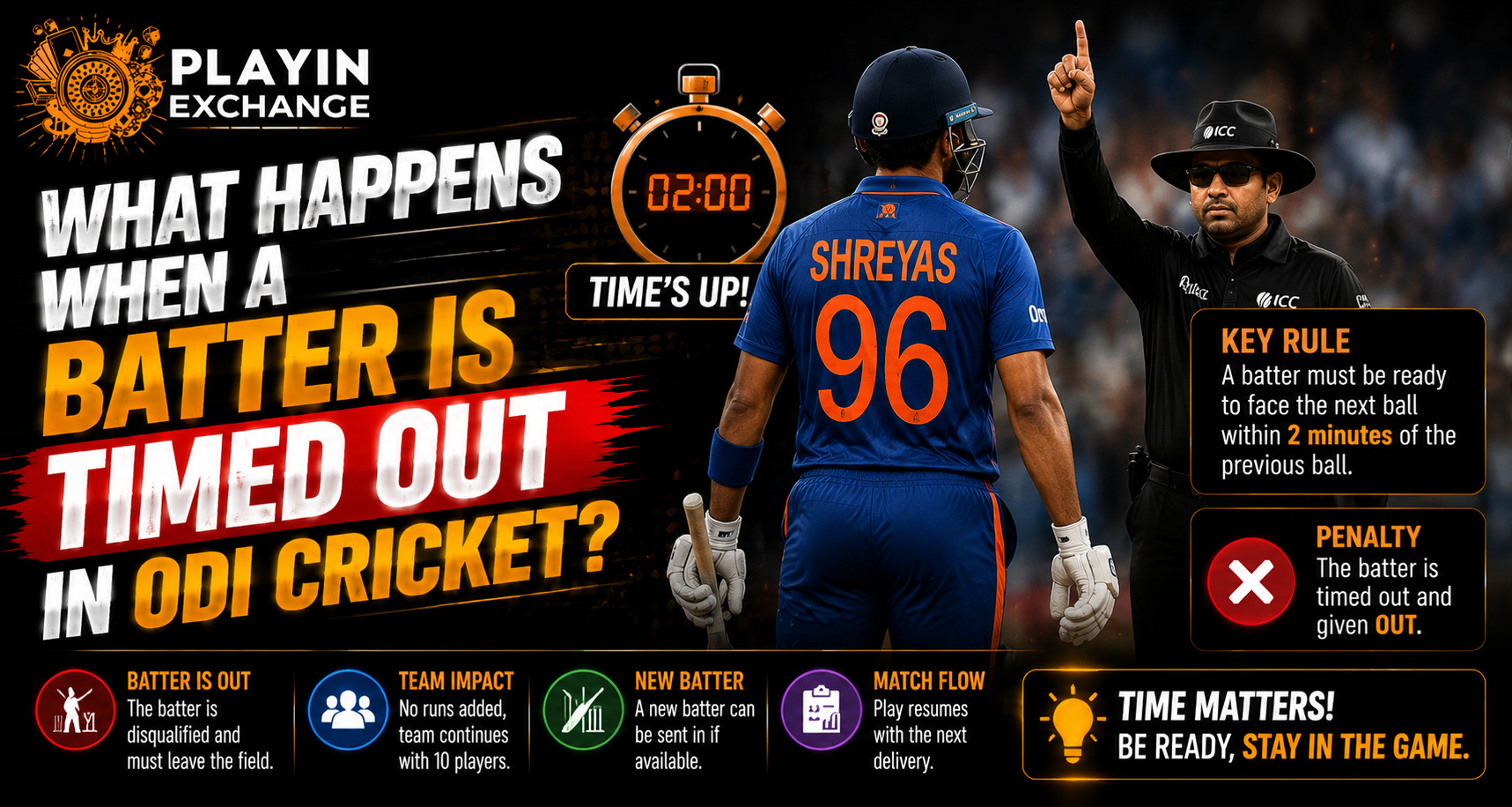
Introduction
Cricket has several unusual dismissal methods, and being timed out is one of the rarest. The rule became widely discussed after Sri Lanka’s Angelo Mathews was dismissed in this manner against Bangladesh at the 2023 Cricket World Cup, the first recorded instance of a timed-out dismissal in men’s ODI cricket. For readers following Playexch cricket updates, understanding this rule can make unusual match situations much easier to follow.
The dismissal is not related to a batter being unable to score within a particular amount of time. Instead, it concerns how quickly the incoming batter must be ready to face the next delivery.
What Does Timed Out Mean?
Under Law 40, an incoming batter must be ready to receive the ball, or for the existing batter to receive the next ball, within three minutes after a wicket falls or a batter retires, unless time has been called. If that requirement is not met, the incoming batter can be dismissed timed out.
The rule is designed to prevent unnecessary delays between dismissals and the continuation of an innings.
How Does a Timed-Out Dismissal Happen?
The process is relatively straightforward.
- A batter is dismissed or retires.
- The next batter is expected to arrive at the crease.
- The incoming batter must become ready within the specified time.
- If the batter is not ready within three minutes, the fielding captain can appeal.
- The umpire can then give the incoming batter out timed out.
The dismissal is therefore connected to the batter’s readiness rather than their batting performance.
Does the Bowler Get the Wicket?
No. One important feature of this dismissal is that the bowler does not receive credit for the wicket.
Law 40 specifically states that the bowler does not get credit when a batter is dismissed timed out.
This makes it different from dismissals such as bowled, caught or leg before wicket, where the bowler can normally receive credit.
Is There an Appeal?
Yes. The fielding side must appeal for the timed-out dismissal. It is not simply an automatic scorekeeping decision once the three-minute period expires.
This distinction became particularly important in the 2023 World Cup incident involving Angelo Mathews. Bangladesh captain Shakib Al Hasan appealed after Mathews was unable to become ready within the required period, and the umpire upheld the appeal.
What Happened to Angelo Mathews?
The 2023 World Cup match between Bangladesh and Sri Lanka produced the first recorded timed-out dismissal in men’s ODI cricket.
Mathews arrived at the crease after a wicket but encountered a problem with his helmet. Before he was ready to face a delivery, Bangladesh appealed for the timed-out dismissal. The umpire eventually gave Mathews out.
The incident generated significant debate because of the circumstances surrounding the helmet issue and the decision to appeal.
Why Is the Rule Important in ODI Cricket?
ODIs operate under strict time and over requirements, so unnecessary delays can affect the rhythm and progress of a match.
The timed-out law provides a clear mechanism to prevent an incoming batter from unnecessarily delaying the resumption of play.
It also places responsibility on players to be ready when required rather than taking an excessive amount of time between wickets.
What Can Cause a Delay?
There can be several reasons why an incoming batter may not be ready immediately.
For example:
- Equipment problems
- Slow movement from the dressing room
- Unnecessary delays
- Confusion over the batting order
- Failure to reach the crease promptly
However, the precise application of the rule depends on the circumstances and the umpires’ assessment.
Does the Three-Minute Period Always Apply?
The law specifies three minutes after a wicket falls or a batter retires, unless time has been called. This means interruptions or specific match circumstances can affect how the timing is handled.
Players and teams therefore need to understand the playing conditions rather than relying on a simple stopwatch assumption in every situation.
Timed Out vs Other Dismissals
A timed-out dismissal differs from more familiar ways of losing a wicket.
DismissalMain ReasonBowler Gets Credit?BowledBall hits the stumpsYesCaughtFielder completes a legal catchYesLBWBatter meets LBW conditionsYesRun OutBatter fails to make their groundUsually noTimed OutIncoming batter is not ready within the required timeNo
This distinction makes timed out one of the most unusual dismissal methods in cricket.
Why Batters Need to Be Ready
The rule encourages players to maintain the normal rhythm of an innings. When a wicket falls, the next batter is expected to move quickly toward the crease and prepare to face the ball.
This is particularly important in ODIs, where teams have a limited number of overs and interruptions can influence the amount of cricket completed.
The rule also prevents teams from deliberately slowing the game after a wicket.
Mobile Match Updates and Account Safety
Fans checking cricket information on mobile devices may search for Playexchange login when accessing account features. Before entering credentials, users should verify the website address and use only an authorised access route.
Passwords, OTPs and other confidential account details should never be shared with unknown contacts. Users should also be cautious of unfamiliar links that claim to provide match updates or account assistance.
Why the Rule Continues to Attract Attention
Timed-out dismissals are extremely rare, which explains why they attract significant attention whenever they occur. Most cricket fans are familiar with caught, bowled, run-out and LBW dismissals, but timed out can appear surprising because no delivery has been bowled to the incoming batter.
The 2023 World Cup incident also demonstrated that a rule can be legally applied while still generating disagreement about the spirit of the game.
Conclusion
A batter is timed out when the incoming player fails to be ready to receive the ball, or for the existing batter to receive the next delivery, within the three-minute period specified by Law 40, unless time has been called. The fielding side must appeal, and the bowler does not receive credit for the dismissal.
The rule is unusual but serves an important purpose by preventing unnecessary delays between wickets. Its rarity means many fans may not encounter it often, but the 2023 Angelo Mathews incident showed how significant the law can become in an ODI.
FAQs
1. What does timed out mean in ODI cricket?
It means the incoming batter was not ready to receive the ball, or for the existing batter to receive the next delivery, within the required three-minute period.
2. How long does a new batter have to be ready?
Under Law 40, the incoming batter must be ready within three minutes after a wicket falls or a batter retires, unless time has been called.
3. Does the bowler get credit for a timed-out wicket?
No. The law specifically states that the bowler does not receive credit for a timed-out dismissal.
4. Does the fielding team have to appeal?
Yes. The dismissal is made after an appeal from the fielding side, as demonstrated by the Angelo Mathews incident in 2023.
5. Who was the first batter timed out in men’s ODI cricket?
Sri Lanka’s Angelo Mathews became the first batter to be recorded as timed out in men’s ODI cricket during the 2023 World Cup match against Bangladesh.
6. Can a timed-out dismissal happen without a ball being bowled?
Yes. The incoming batter can be dismissed timed out before facing a delivery if the requirements of Law 40 are met and the fielding side appeals.